





Bengali Migrant Labour is Living Under Perpetual Fear
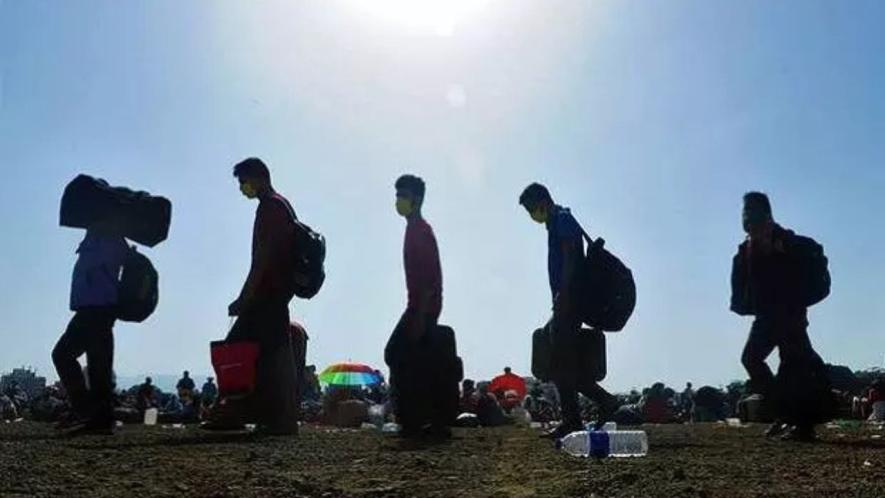
Representational Image. File Image
Kolkata: The brutal killing of 19‑year‑old Juel Rana, a Bengali migrant labourer from Murshidabad, has shaken Sambalpur in Odisha and reignited fears among thousands of workers who leave their villages to toil in distant states. Juel was lynched last Wednesday after being branded a “Bangladeshi” by locals — a slur that has become increasingly common in parts of India where Bengali‑speaking migrants are viewed with suspicion. His death is not just a crime of violence; it is a chilling reminder of how communal prejudice, political rhetoric, and institutional apathy combine to strip migrant workers of dignity and safety.
The Incident
Juel Rana had migrated from Bengal to Sambalpur several years ago, joining the ranks of daily wage labourers who sustain the city’s construction and informal economy. On Wednesday evening, he stepped out with two companions to have tea near their residence. The three were suddenly accosted by six men who accused them of being “Bangladeshi nationals.”
The attackers demanded proof of identity. When the labourers offered to fetch their Aadhaar cards, the mob refused to relent. Instead, they launched a violent assault. Witnesses say Juel was struck on the head with a blunt weapon. He began vomiting soon after and was rushed to a government hospital, where he succumbed to his injuries. His companions, also Bengali migrants, sustained serious injuries and are hospitalised.
Police Response and Attempted Dilution
Local police arrested all six accused shortly after the incident. Yet controversy erupted when senior officials attempted to downplay the crime, citing “personal enmity” as the motive. This narrative has been strongly contested by the victim’s family, fellow workers, and community members, who insist the assault was triggered by the labourers speaking in Bengali.
The attempt to dilute the communal undertones of the crime has further angered migrant workers. “We are being targeted simply because we speak Bengali. They call us Bangladeshis even when we show our Aadhaar cards,” said one of Juel’s injured companions from his hospital bed.
The Family’s Struggle
Back in Murshidabad, Juel’s death has devastated his family. His father, also a migrant labourer, works in Kerala. Together, the father and son’s meagre earnings sustained the household. With Juel gone, the family faces both emotional and financial ruin.
“The poor family was held together by the father‑son duo. Now the backbone has been broken,” said CPI(M) leader Prasanta Das, who visited the bereaved household. Relatives described Juel as hardworking and determined to support his family despite the hardships of migrant life. His killing has left them fearful for the safety of other young men from the district who migrate to different states in search of work.
Communal Angle: Bengali as ‘Bangladeshi’
The Sambalpur lynching cannot be seen in isolation. Branding Bengali‑speaking migrants as “Bangladeshi” has become a dangerous trend across several states. The slur carries communal undertones, conflating linguistic identity with religious and national suspicion. In many Bharatiya Janata Party‑ruled states, political rhetoric around “illegal Bangladeshi infiltrators” has seeped into everyday discourse, emboldening locals to view Bengali migrants — Hindu or Muslim — as outsiders.
Civil society groups point out that this narrative is weaponised to stigmatise entire communities. Migrants are harassed, excluded from housing, denied fair wages, and, as in Juel’s case, subjected to violence. The communal angle is unmistakable: suspicion of Bengali migrants is often framed through the prism of religion and nationality, reducing Indian citizens to “foreigners” in their own country.
Political Reactions
The incident has drawn sharp political reactions. CPI(M) leaders in Murshidabad condemned the killing and accused BJP governments of fostering hostility toward Bengali migrants. “In BJP‑run states, the government is encouraging locals to view Bengali migrants with suspicion, dubbing them Bangladeshi nationals. This is creating an atmosphere of enmity and violence,” alleged Das.
Opposition parties have demanded accountability and a fair investigation, while local authorities’ silence or minimisation has raised concerns about institutional bias. The refusal to acknowledge the communal dimension of the crime is seen as part of a broader pattern of denial.
Migrant Labourers Under Siege
The tragedy in Sambalpur highlights the precarious existence of migrant labourers across India, who form the backbone of the informal economy, contributing to industries ranging from construction to agriculture. Yet, they remain among the most vulnerable sections of society.
In states where jobs are scarce and competition is high, outsiders are frequently scapegoated. For Bengali‑origin workers, the stigma of being labelled “Bangladeshi” has long been a source of humiliation and danger. Despite possessing valid identity documents, they are often treated as foreigners. This narrative has been politically weaponised in recent years, particularly in the context of debates around the National Register of Citizens (NRC) and Citizenship Amendment Act (CAA).
Experts note that such incidents underscore the urgent need for stronger protection for migrant workers. Their lack of social security, combined with cultural prejudice, leaves them exposed to exploitation and violence.
Community Fear and Fallout
In Sambalpur, the migrant community is now gripped by terror. Many workers are afraid to step out, fearing they could be next. “We came here to earn a living, not to die. If speaking Bengali makes us Bangladeshi in their eyes, then what protection do we have?” asked another labourer, echoing the sentiments of dozens who now feel unsafe.
The Sambalpur killing has also sparked debates in Murshidabad, where families depend heavily on remittances from migrant workers. Parents worry about sending their sons to other states, yet economic necessity leaves them with little choice. The incident has deepened both economic and emotional insecurities in a district already marked by poverty and migration.
Communal Rhetoric and Everyday Violence
The Sambalpur lynching illustrates how communal rhetoric translates into everyday violence. When political leaders repeatedly invoke the spectre of “Bangladeshi infiltrators,” it legitimises suspicion against ordinary Bengali‑speaking citizens. The line between political discourse and street violence blurs, creating an environment where mobs feel empowered to police identity.
This is not merely a law‑and‑order issue. It is a question of how communal prejudice is normalised and institutionalised. The refusal of police to acknowledge the xenophobic motive reflects a deeper unwillingness to confront the communalisation of public life.
A Call for Dignity and Protection
Rana’s killing is more than just a crime; it is a stark reminder of the dangers faced by migrant labourers in India. His murder underscores how prejudice, political rhetoric, and weak institutional responses combine to create an environment where vulnerable workers are dehumanized and attacked.
As Sambalpur’s migrant community mourns, the larger question remains: how many more lives must be lost before migrant workers are accorded the dignity, safety, and recognition they deserve?
Get the latest reports & analysis with people's perspective on Protests, movements & deep analytical videos, discussions of the current affairs in your Telegram app. Subscribe to NewsClick's Telegram channel & get Real-Time updates on stories, as they get published on our website.