





Institutional Erosion: Mockery of Parliament
The Winter Session of the 18th Lok Sabha which concluded on Friday December 19, 2025 will be remembered not for its deliberations, but for the systematic dismantling of established norms. In a span of merely 19 days, Parliament transitioned from a deliberative assembly of lawmakers to become a procedural clearing-house. The session was defined by the aggressive bulldozing of contentious laws and a conspicuous vacuum of leadership resulting in a "mockery of Parliament."
The backdrop was ominous. While the residents of the country’s national capital gasped under "severe" air pollution, a crisis Opposition MPs unsuccessfully sought to discuss via adjournment motions, the atmosphere inside the two Houses of Parliament was stifled by a legislative agenda that prioritised velocity over scrutiny.
The government pushed through two transformative Bills to make them laws, the Viksit Bharat Guarantee for Rozgar and Ajeevika Mission (Gramin) (VB-G RAM G) Bill and the Sustainable Harnessing and Advancement of Nuclear Energy for Transforming India (SHANTI) Bill, utilising voice votes to drown out dissent amidst pandemonium and chaos. The voice vote is a mechanism that, amidst disorder, effectively shields individual MPs from accountability by preventing a recorded division of votes.
The government used ambush tactics to introduce the two Bills through a supplementary list with less than 12 hours' notice. Despite vociferous demands, the government refused to refer these consequential Bills to Standing Committees, thereby bypassing debate and detailed scrutiny of laws that fundamentally change India’s rural employment guarantee programme and alter the country’s nuclear liability dispensation.
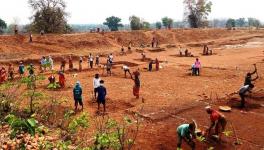
Replacing the Mahatma Gandhi National Rural Employment Guarantee Act (MGNREGA), the VB-G RAM G Bill shifts the legal framework from making the scheme a "right" to a "mission." It introduces a controversial 60-day "agricultural pause" during harvest seasons, which effectively makes agricultural workers "bonded labourers" by removing their bargaining power.
Additionally, the new Bill mandates a 60:40 funding split between the Central government and state governments, threatening the employment guarantee scheme's viability, particularly in poorer states. The removal of Mahatma Gandhi's name in favour of the acronym RAM led to acrimony with MPs tearing copies of the Bill.
Opposition MPs perceived the insertion of Ram (in the Hindi acronym of the Bill) as a deliberate attempt to communalise a secular welfare program. However, Union Agriculture Minister Shivraj Singh Chouhan dismissed the critics arguing that Gandhi’s name was not in the original 2005 Act but added later in 2009.
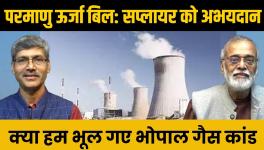
As for the SHANTI Bill, it amends the 1962 Atomic Energy Act to allow private sector participation. Most controversially, it dilutes the "supplier liability" clause established after the 1984 Bhopal Gas tragedy, a move critics call a "radioactive gamble" that privatises profits while socialising risk. It was argued that the new Bill was introduced because of US and Western pressure. The Bill exempts private operators from the Right to Information (RTI) Act, creating a "black box" around nuclear safety.
The most contentious aspect of the SHANTI Bill is the alteration of the Civil Liability for Nuclear Damage (CLND) Act of 2010 that was passed after intense debate and included a fierce "supplier liability" clause (Section 17(b)), which allowed the operator to sue the supplier in case of an accident caused by defective equipment. This was a direct lesson from the Bhopal Gas tragedy.
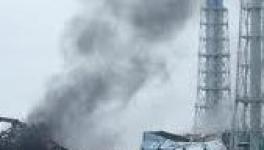
The SHANTI Bill removes, if not severely dilutes, this "right of recourse" to attract foreign vendors like Westinghouse and Electricite de France which had refused to enter the Indian market due to the liability risks. In the event of a nuclear disaster, the foreign supplier would walk away free, and the Indian taxpayer would bear the cost of compensation and clean-up, capped at a relatively meagre amount between ₹3,000 crore and ₹4,000 crore, a fraction of the cost of a disaster like the one in Fukushima, Japan, estimated at $182 billion.
Beyond these two headline Bills, the Winter Session saw other important legislative moves that further illustrate the "mockery" of procedure. Parliament passed the Sabka Bima Sabki Raksha (Amendment of Insurance Laws) Bill, 2025, which allows 100% Foreign Direct Investment (FDI) in the insurance sector.
Opposition MPs demanded this be sent to a parliamentary panel, arguing it would lead to the dominance of foreign capital over Indian savings. However, the demand was rejected, and the Bill was passed, continuing the trend of financial liberalisation without Parliamentary scrutiny.
The Lok Sabha also passed the Appropriation (No. 4) Bill, 2025 and Appropriation (No. 5) Bill, 2025, authorising huge government expenditures.
The session ended without a discussion on the dangerous level of air pollution in the National Capital Region of Delhi.
A functioning democracy relies on visible engagement from its leaders. However, the Winter Session was marked by abdication of duty by the country’s two most significant political figures. Prime Minister Narendra Modi was out of the country when Parliament debated the repeal of MGNREGA, a scheme he described as a “living monument” (asafalta ka pratik) of the failure of the Congress-led United Progressive Alliance (UPA) in the Lok Sabha in February 2015. Yet, the Modi government scheme increased the outlays on the scheme thereafter – it’s importance in alleviating rural poverty became especially evident after the post-pandemic, countrywide harsh lockdown in March 2020.
If the Prime Minister’s absence was calculated, the absence of Leader of the Opposition, Rahul Gandhi, appears to have been a strategic blunder. He was touring a car factory in Germany as he called the Bill "anti-village" on the microblogging platform, Twitter (X). His physical absence was capitalised on by the treasury benches and weakened the Opposition, as his MPs struggled in the well of the Lok Sabha.
It was a bizarre spectacle, with the two most important individuals missing from the “temple of democracy” as important laws were repealed and new ones put in place. The Parliament of the “world’s largest democracy” has degraded from being a sovereign body of decision-making to a secondary theatre of politics.
The writers are independent journalists. The views are personal.
Get the latest reports & analysis with people's perspective on Protests, movements & deep analytical videos, discussions of the current affairs in your Telegram app. Subscribe to NewsClick's Telegram channel & get Real-Time updates on stories, as they get published on our website.