





VB Shiksha Adhishthan Bill, 2025: Reforming or Restricting?

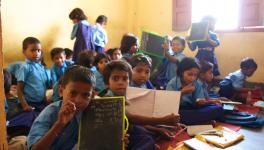
Representational Image. Image Courtesy: Flickr
The history of education policies in India shows that the successive governments have used the education policies to set academic priorities, reform existing institutions and regulations and align the knowledge production that suits their political orientation, be it India’s first New Education Policy (1968) introduced under Indira Gandhi or NEP 2020 introduced under Prime Minister Narendra Modi. However, these policies vary in their approach to introducing reforms, centralisation, and academic independence within existing institutions.
In a similar vein, the government recently presented the Viksit Bharat Shiksha Adhisthan Bill, 2025, in Parliament. It has been proposed as a key reform aimed at modernising higher education and competing with universities worldwide. However, Opposition leaders, the academic community and civil society have raised concerns over the wording and intentions of the tabled Bill.
Retired Professor Nandita Narain (chairman of the Joint Forum for Movement on Education) argues that the legislation seems less about reform and more about control, which will ultimately reduce institutions of higher education into administrative extensions of the State. Although the Bill has been referred to the Joint Parliamentary Committee following Opposition protests, it requires further deliberation on the issues raised, particularly by the academic community, who are at the receiving end.
What Does the Bill promise?
The Bill seeks to amend the existing regulatory bodies for higher education, namely, (i) University Grants Commission (UGC), (ii) All India Council for Technical Education (AICTE), and (iii) National Council for Teacher Education (NCTE). It covers almost all sections of higher education except legal and medical studies, which will continue to be regulated through separate acts. Once passed, all these regulatory institutions will be replaced by a single council of 14 members, headed by the President of India.
According to the Union Education Minister, this Bill aims to increase efficiency and coordination by establishing a single Commission with three separate councils for accreditation, regulation, and standardisation. It further promises that this will prevent duplication of authorities and ensure uniform educational standards.
However, the Bill has been opposed on grounds of the absence of consultation with academic bodies and universities, excessive centralisation, narrowing of institutional autonomy, and violation of the principles of delegated legislative powers between states and the Centre.
Sanskritised Nomenclature
The name of the introduced Bill is highly Sanskritised, making it difficult for Hindi speakers to comprehend, let alone those whose mother tongue is not Hindi. The nomenclature of -- The Viksit Bharat Shiksha Adhishthan Bill, 2025-- is not merely a semantic preference but a deliberate linguistic stance of the government. However, the government's stance of using the Hindi nomenclature without an alternative English name violates Article 348(1)(b) of the Indian Constitution, which mandates that the authoritative text shall be in English. Since the Bill has been sent to a Joint Parliamentary Committee, it should first reflect on the nomenclature. As the Chinese saying goes, "The beginning of wisdom is calling things by their proper name.
Overriding Legislation
Another issue with the Bill is its centralising nature. The Union government has justified this by citing that the subject of 'education' falls under the Concurrent List. Although the government is formally correct, it has undermined the constitutional evolution of listing of subjects.
The fact is that 'Education' has historically been included in the State List and subsequently transferred to the Concurrent List by the 42nd Constitutional Amendment Act of 1976, which granted limited power for standardising education across the country. The amendment does not provide for comprehensive legislation on the subject of education.
However, the Bill legislates beyond standardisation and addresses the affiliation, composition, and closure of all higher education institutions, including IITs, NITs, IIMs, IIITs, and all distance education institutions. This means that it has the potential to impact around 46,000 state universities and affiliated institutions, which enrol approximately 81% of the total higher education enrollment.
In a federal country like India, reform must align with the principles of cooperative federalism.
Question of Institutional Autonomy
The Bill raises concerns about institutional autonomy, as it curtails the existing link between regulatory and funding powers. Historically, regulatory institutions, such as UGC had the financial power to allocate a budget to institutions without seeking executive approval from the government. This ensured insulation from political control to some extent. Under the proposed Bill, the allocation of funds becomes the discretionary power of the Union government. This shift has the potential to cull institutional independence.
Second, the proposed Bill streamlines the appointment process for chairpersons and other members of the commission, thereby enhancing the role of the Union government. While the members are to be appointed by the President on the recommendations of the selection committee, the Constitution disproportionately favours the Union government with a limited role for the states, which too is on a rotational basis.
And finally, the Bill proposes stringent monetary and administrative penalties for indiscipline and non-compliance, ranging from the removal of officials to the withdrawal of degree-granting powers, withholding grants, and fines of up to two crores. This concerns the state and academic community, as any appeal against the Commission and Council will be directed to the Central government, rather than to an independent tribunal or court.
The Road to Academic Freedom
At its heart, the core debate on the Viksit Bharat Shiksha Adhisthan Bill, 2025, is not about restructuring the regulatory institutions but rather the apprehensions about academic freedom. Therefore, any legislation on higher education in India must be informed by the best practices around the world. Globally, academic freedom is considered essential for cultivating curious, critical, and independent minds that can lead society. In fact, international human rights law recognises academic freedom as a core human right. Most European countries seek academic standards from Article 13 of the European Union Charter of Fundamental Rights, which states, "Art and science research shall be free of constraints. Academic freedom shall be respected". This has been equally emphasised by the Indian Constitution, as outlined in Article 45, which advocates for free and compulsory education for all children.
As the Bill is under the scrutiny of the Joint Parliamentary Committee, it must emerge with legislation that reflects a sense of cooperative federalism, safeguarding academic freedom.
The writer is a senior doctoral research fellow at Jawaharlal Nehru University, New Delhi. The views are personal.
Get the latest reports & analysis with people's perspective on Protests, movements & deep analytical videos, discussions of the current affairs in your Telegram app. Subscribe to NewsClick's Telegram channel & get Real-Time updates on stories, as they get published on our website.