






Capital’s Forgotten Villages: Constitutional Betrayal in Delhi
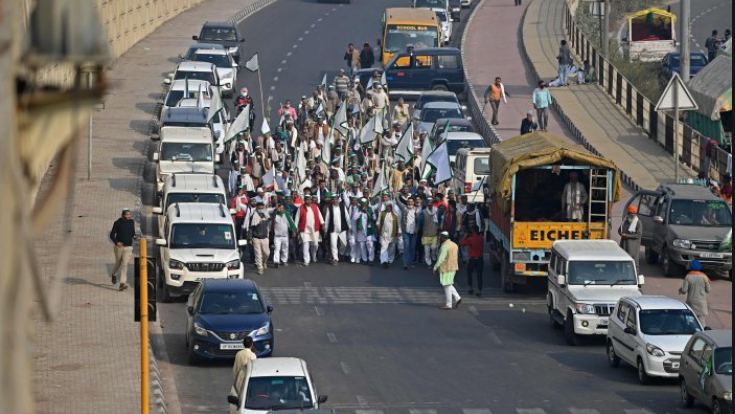
Delhi’s transformation into the capital of modern India after Independence is often celebrated as a story of national achievement. Beneath this narrative, however, lies a rarely acknowledged and continuing injustice — the systematic dispossession of native village communities and the quiet erasure of their constitutional rights because the Delhi Model of development never arranged a public policy for the use of village commons that were declared urban or as development areas for the expansion of Delhi. Now, this policy paralysis is growing footprints in every urbanising village, all growing towns and rapidly developing cities across the country.
Legislative Betrayal: Dispossession by Design
The alienation of Delhi’s villages from their Gram Sabha lands was not the result of bureaucratic carelessness, but a planned legislative intervention. The Delhi Land Reforms Act, 1954, originally pledged to empower cultivators and place Gram Sabha lands including ponds, wastelands, and grazing grounds under community stewardship.
Official records show the stark reality: between 1958 and 1959, over 63,000 acres of such land were transferred to Gaon Sabhas to be vested under Central government at a nominal compensation of Rs. 3.71 per acre, a valuation that obliviously dismissed both economic and constitutional equity.
Parliamentary proceedings from the era leave no ambiguity about the intent: these lands were to remain for village development, never as government acquisitions for general use. But as Delhi’s urban expansion accelerated, the revenue and assets from these lands vanished into state coffers, with no traceable benefit accruing to the villages that had lost them. This amounts to an economic and moral transgression — the native rural inhabitants became spectators to the extraction of their ancestral lands, their compensation minimal and their consent bypassed. This vicious cycle of loot continues even today.
Local Democracy Abolished
In 1990, with a single executive order, Delhi’s panchayats in rural villages were abolished. This move came just before India, as a whole, formally recognised panchayats and municipalities as the third tier of governance through the 73rd and 74th Constitutional Amendments in 1992. The outcome was stark: while rural India celebrated a new age of local self-governance, the rural communities of more than 200 villages of Delhi saw their constitutional rights vanish overnight.
Today, Delhi’s 49 rural villages (plus 174 declared urban villages of 2018-19) remain deprived of the very rights accorded to rural India everywhere else: the right to self-governance, representation, and community-driven planning. With bureaucrats and agencies, such as the Delhi Development Authority (DDA), assuming custodianship, public assets shifted into the hands of unelected officials, with little transparency or accountability.
This issue is not just about Delhi alone. As highlighted by the Ministry of Housing and Urban Affairs during World Habitat Day 2025, cities across India, including Delhi, face mounting challenges from urbanisation, climate change, and social exclusion. The government’s vision for ‘Viksit Bharat 2047’ includes making cities resilient, inclusive, and future-ready through integrated urban and peri-urban planning. Yet, the persistent neglect of Delhi’s rural village communities, lays bare a stark contradiction in this vision.
If the capital’s villages, which are at the very heart of India’s urban future, are subjected to constitutional betrayal, dispossession, and bureaucratic apathy, it poses a grave warning for the rest of India’s countryside. With millions of rural villagers across India poised to face similar pressures from expanding cities, the failure to protect and empower Delhi’s villages threatens a wider unraveling of rural rights and environmental protections.
The survival of India’s rural heartlands amid accelerating urbanisation demands more than policies and slogans; it requires concrete action to safeguard village commons, restore local self-governance, and ensure transparent, inclusive development with the help of technology and local area planning. Without this, the stories of dispossession and disenfranchisement unfolding in Delhi's villages will replicate nationwide, undermining the goal of equitable, climate-resilient, and dignified living spaces for all Indians.
Evidence of Prolonged Neglect
Successive official reports underscore the depth of the failure:
Financial opacity: Parliamentary responses and a 2016 CAG (Comptroller and Auditor General) report confirm no separate audits or record maintenance for Delhi’s Gram Sabha assets and consistent mismanagement of leases.
Institutional abdication: A 2014 Parliamentary Standing Committee found that after acquiring land in 240 villages, the DDA neglected even basic infrastructure or amenities for these areas, a direct defiance of a 1993 Delhi High Court order mandating the integration of villages with planned urban development.
Ecological damage: What were once commons — vital ponds and groves — have been concretized or encroached, contributing to Delhi’s intensifying water stress and rising temperatures, especially in urban villages. This mismanagement has led to ecological imbalances, as revealed by both ISRO thermal data and field studies.
Judicial disregard: The Supreme Court’s 2011 directive (Jagpal Singh & Ors. vs. State of Punjab & Ors.) called for the restitution of village commons across India. Delhi’s persistent defiance of this order not only perpetuates injustice but reflects a broader institutional contempt for restorative justice.
Pathways to Redress
Delhi’s villages stand stripped of both land and agency, left in administrative limbo while the rest of India moves forward. The ongoing draft of Master Plan 2041, which proposes to subsume Gram Sabha lands as per approved sector development plans, is but the latest example of this continuing neglect. It is time for the state to act:
Official Acknowledgment: The government must publicly recognise the historical and ongoing injustice, with a White Paper charting specific, timely reparative actions.
Restoring Self-Governance: Panchayats in rural villages and Village Development Councils in urbanised villages must be urgently reconstituted, reversing the anomalous 1990 abolition and recognizing the fundamental rights enshrined by the 73rd and 74th Amendments.
Transparent Accounting: An independent audit of all village assets and revenues since 1954 should be conducted, with proceeds placed in a dedicated Village Development Fund managed by restored local bodies.
Implementing Judicial Directives: All encroached or misappropriated commons must be restored to communities, in line with the Supreme Court’s mandate.
Delhi’s villages are not peripheral anomalies but foundational communities — their dispossession a cautionary lesson against unchecked urbanisation for the whole nation that is facing unprecedented challenge of rapid urbanization. Reparative justice is overdue and lies not in symbolic gestures but in undoing the constitutional wrongs by authorities that have turned “native’ Delhiites into strangers on their own land. It is time for the decision-makers in Delhi to listen, recognize, and act.
The continuing injustice with Delhi’s native villagers, lays bare a national crisis. Reparative justice is overdue, and the authorities overseeing Delhi’s urban future must summon the will—guided by law, evidence, and conscience—to make it real. Delhi’s forgotten villages demand it; India’s constitutional promise requires it.
The writer is president, Centre for Youth Culture Law and Environment (CYCLE).
Get the latest reports & analysis with people's perspective on Protests, movements & deep analytical videos, discussions of the current affairs in your Telegram app. Subscribe to NewsClick's Telegram channel & get Real-Time updates on stories, as they get published on our website.