






NPOA‑SSF: Capitalist Expansion Masked as Community Empowerment?
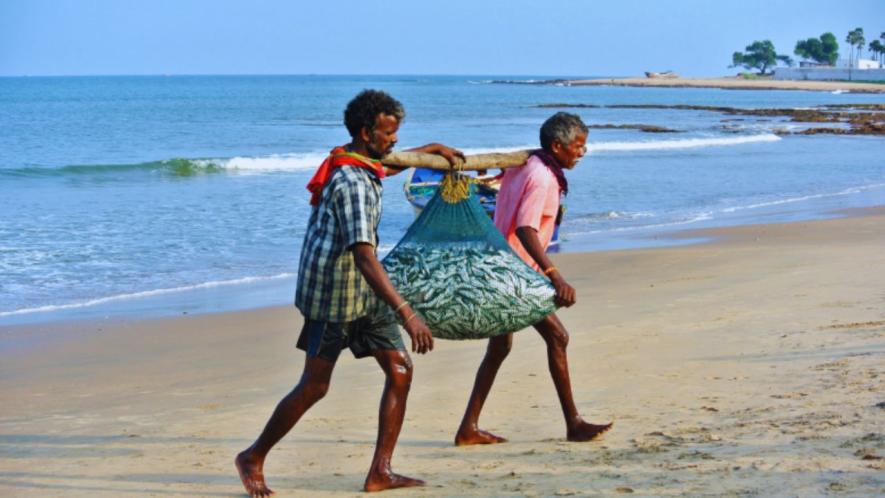
Image Courtesy: PxHere
Narendrapur, Kolkata: The National Plan of Action for Small-Scale Fisheries (NPOA‑SSF), unveiled with much fanfare at the Ramakrishna Mission Campus in Narendrapur, is being hailed as a “landmark” in India’s fisheries governance. Government officials, international organisations, and select community leaders gathered on December 28–29 to declare their commitment to a rights-based, inclusive framework. Yet, beneath the rhetoric of empowerment, lies a troubling reality: the NPOA‑SSF risks becoming another instrument of capitalist expansion, co‑opting the fishing community’s voices while advancing agendas that prioritise profit over people.
Promise vs. Reality
The Bay of Bengal Programme (BOBP), which leads the initiative, insists the plan will strengthen communities and safeguard ecosystems. But critics argue that the language of “participation” and “consultation” masks a deeper intent: to integrate small-scale fisheries into global markets, subjecting them to the same exploitative dynamics that have long undermined artisanal livelihoods.
By aligning the NPOA‑SSF with international guidelines, the government positions itself as progressive. Yet, the emphasis on “science-informed management” and “technical expertise” often translates into top-down control, sidelining traditional knowledge and community autonomy. What is framed as modernisation may in fact be a mechanism to discipline fishers into compliance with industrial and export-driven priorities.
A Pattern of Dispossession
India’s fisheries sector has long been a site of conflict between artisanal fishers and industrial interests. Since the 1970s, the introduction of mechanised trawlers has displaced thousands of small-scale fishers. In states, such as Kerala and Tamil Nadu, violent clashes erupted between artisanal communities and trawler operators, leading to bans on night trawling and seasonal restrictions. Yet, enforcement remained weak, and industrial fleets continued to dominate.
The 1990s liberalisation era intensified these pressures. Coastal aquaculture, particularly shrimp farming, expanded rapidly to meet export demand. While India became the world’s largest exporter of farmed shrimp, local communities bore the costs: salinisation of agricultural land, destruction of mangroves, and loss of traditional fishing grounds. Reports from Andhra Pradesh documented widespread displacement, with fisher families forced into precarious wage labour.
The NPOA‑SSF emerges against this backdrop. Its promises of rights and sustainability echo earlier policy rhetoric, yet history suggests such frameworks often serve to legitimise capitalist expansion rather than restrain it.
Case Study 1: Shrimp Aquaculture in Andhra Pradesh
Andhra Pradesh’s aquaculture boom illustrates how “development” can devastate small-scale fishers. By the early 2000s, shrimp farms covered over 100,000 hectares of coastal land. Mangroves, once vital breeding grounds for fish, were cleared. Traditional fishers lost access to estuaries and lagoons.
While the industry generated billions in export revenue, local communities faced declining catches, polluted water, and health hazards. Women, who depended on mangroves for firewood and crabs, were particularly affected. Promises of employment in shrimp farms proved hollow: jobs were seasonal, low-paid, and often unsafe.
The NPOA‑SSF’s emphasis on “livelihood diversification” risks repeating this pattern. By encouraging fishers to enter aquaculture or allied industries, the plan may push them into exploitative labour markets rather than securing their traditional rights.
Case Study 2: Trawler Conflicts in Kerala
Kerala’s coastline has witnessed decades of conflict between mechanised trawlers and artisanal fishers. In the 1980s, fishers organised mass protests against trawler incursions into nearshore waters. The government responded with seasonal bans, but enforcement remained lax.
Artisanal fishers argued that trawlers destroyed juvenile fish and damaged nets, undermining sustainability. Yet, industrial operators, backed by export lobbies, continued to expand. The result was declining catches for small-scale fishers and rising indebtedness.
The NPOA‑SSF’s proposed “co-management frameworks” may appear inclusive, but without structural limits on industrial fleets, they risk becoming token consultative bodies. Fishers may be invited to meetings, but decisions will remain aligned with export priorities.
Case Study 3: Coastal Development in Goa
In Goa, tourism-driven coastal development has displaced fishing communities. Traditional landing sites have been converted into resorts and private beaches. Fisher families report harassment when they attempt to dry nets or sell fish near tourist zones.
Government policies often prioritise tourism revenue over fisher rights. The NPOA‑SSF’s silence on such conflicts is telling. By focusing on “ecosystem health” and “climate resilience,” the plan avoids confronting the structural drivers of dispossession: privatisation of coastal commons and commodification of natural resources.
Scale of the Crisis
India is the second-largest fish producer globally, with annual production exceeding 14 million tonnes. The sector contributes 1.2% to GDP and supports 28 million livelihoods. Yet, marine capture fisheries have stagnated at around 3.5 million tonnes annually since the mid-2000s, reflecting resource depletion.
Small-scale fishers account for 85% of active fishers, but their incomes have declined sharply. A 2023 study found average monthly earnings of artisanal fishers at ₹6,000–8,000, compared with ₹25,000–30,000 for industrial operators. Women, who dominate post-harvest activities, earn less than ₹200 per day, often without social protection.
These figures highlight the structural inequities the plan claims to address. Yet without redistributive measures — curbing industrial fleets, protecting customary rights, and investing in social infrastructure — the NPOA‑SSF risks becoming another technocratic exercise.
Gender and Youth: Token Inclusion
The plan’s emphasis on gender equality and youth engagement is laudable on paper. Yet, fisherwomen continue to face systemic exclusion from decision-making, and young people are pushed into precarious migration due to lack of viable opportunities.
In Odisha, women fish vendors report harassment by police and municipal authorities, who view informal markets as “illegal.” In West Bengal, youth migrate to cities for construction work, abandoning fishing due to declining catches and lack of credit.
Without structural change — redistribution of resources, protection from industrial encroachment, and genuine co-management — these commitments risk becoming token gestures, useful for donor reports but hollow in practice.
Capitalist Logic of ‘Sustainability’
The most insidious aspect of the NPOA‑SSF is its framing of sustainability. By emphasising ecosystem health and climate resilience, the plan appears progressive. But sustainability here is often defined in terms of resource efficiency and market stability, not community well-being.
Fishers are asked to adopt “responsible practices” while corporations continue to profit from large-scale extraction and export. The burden of conservation is shifted onto the poorest, while the structural drivers of ecological collapse — industrial fleets, pollution from coastal industries, and global trade demands — remain untouched.
Community Voices: Co‑opted or Heard?
Community leaders at a recent workshop held in Kolkata spoke passionately about rights and livelihoods. Yet, the very format of such events raises questions: are these voices genuinely shaping policy, or are they being staged to legitimise a predetermined agenda?
Translating documents into vernacular languages and holding consultations may give the impression of inclusivity, but without binding commitments to redistribute power, these measures risk becoming performative.
Need for Vigilance
The Narendrapur workshop ended with pledges of collaboration and optimism. But for many observers, the NPOA‑SSF represents less a breakthrough than a continuation of capitalist capture of fisheries governance. By cloaking market integration in the language of rights and sustainability, the plan risks undermining the very communities it claims to empower.
If the government is serious about justice for small-scale fishers, it must move beyond symbolic gestures and confront the structural inequities that define India’s fisheries sector. Otherwise, the NPOA‑SSF will be remembered not as a tool of empowerment, but as a policy of pacification — a capitalist cloak draped over communities struggling to survive.
Get the latest reports & analysis with people's perspective on Protests, movements & deep analytical videos, discussions of the current affairs in your Telegram app. Subscribe to NewsClick's Telegram channel & get Real-Time updates on stories, as they get published on our website.